- The Wipeout Weekly
- Posts
- 🏄♀️ Are you a granola surfer? 🤔
🏄♀️ Are you a granola surfer? 🤔
Plus: Surfing isn’t exactly eco-friendly, wetsuit fixes, going down the line, and a bit of news


👋 Happy weekend! A big thank you to everyone who responded with suggestions on how to make The Wipeout Weekly even more riveting and useful! 😜 Stickers are on their way. Ideas—always welcome, payment in…stickers, obviously.
🏄♀️ Let’s surf:
Are you a granola surfer? 🤯
When to fix your wetsuit 🧵
Down the line, off we go 🏄♀️
Mission: Impossible pic of the week 🌅
Surf news roundup 📰
Who the hell is Wee Fatty? 🦦
SURFODRAMA
😱 Are you a granola surfer? 🤯

There Will Be Blood. But… make it surfing.
Whaaat? A granola surfer? Let me explain. One of the surf mags, The Inertia, did a story on 15 ironies of surfing. Ironies mostly applicable to experienced surfers like its author.
One commentator called him out on being a “granola surfer” (I only understood this nickname in context), conveniently forgetting that surfing is “one of the most environmentally unfriendly activities on earth.”
Oh the irony!
🤯 Wait…what?
That stopped me in my tracks. Whaaat? Surfing is not environmentally friendly? I swear I wear reef-safe sunscreen and when I pee in the ocean it is merely water!
How can this statement even be true?
Short answer: it’s not true in the way that comment suggests—but it’s also not totally wrong. It’s a classic oversimplification, with an annoying grain of truth.
🌊 The “clean” version of surfing
If you strip surfing back to the very basics, it’s about as “clean” as an ocean sport gets. No engines, no oil—unless it’s tow-in. No noise…well, unless it’s e-foiling. No permanent structures. Crap. Wave pools. No ongoing energy use except your own paddling power. At least that one still tracks.
So yes, from a pure activity standpoint, surfing sits much closer to swimming or hiking than anything industrial. Or even a more involved ocean sport like wakeboarding.
🧠 The weird middle ground
Because that’s where surfing lives—in this weird middle of being eco-friendly and not eco-friendly at the same time.
The act of surfing is low impact. It’s just you, the water, and your board (more on that in a moment). But then there’s everything around it, and that’s where things get a bit less…granola.
Surfboards are the obvious one. Most are made from petroleum-based foam, fiberglass, and resin. They don’t recycle easily, they break—especially when you’re learning, sorry—and the manufacturing process isn’t exactly gentle on the planet.
Wetsuits don’t help the case either. Traditional neoprene is petroleum-based, energy-intensive to produce, and difficult to recycle. There are better options now, but they’re not exactly everywhere yet.
And then there’s the one surfers don’t love talking about. Travel. The flights, the road trips, the “it’s only a quick mission” that somehow turns into a three-hour drive each way. One surf trip can outweigh years of just paddling out locally. That’s the part that quietly does the damage.
🌍 So is surfing actually bad for the environment?
No. That’s way too dramatic.
Put it next to motorsport, ski resorts, or golf courses and it doesn’t even come close. But put it next to running, swimming, or just existing and it’s definitely more resource-heavy than we might like to admit.
Which is kind of the point the commenter was trying to make—just with a sledgehammer.
Because, let’s face it, this isn’t really about facts. It’s about identity.
We like to see ourselves as nature-loving, ocean-protecting, eco-conscious humans. Reef-safe sunscreen only! And to be fair, a lot of that is true.
But there’s no denying that some very un-eco supply chains are hiding in the background.
So the critique isn’t that surfing is terrible. It’s that maybe it’s not quite as pure as we like to think.
And that’s still ok.
Just…a bit ironic.
SURF SCIENCE (AT LEAST WE THINK THIS IS SCIENCE)
🧵 When to fix your wetsuit
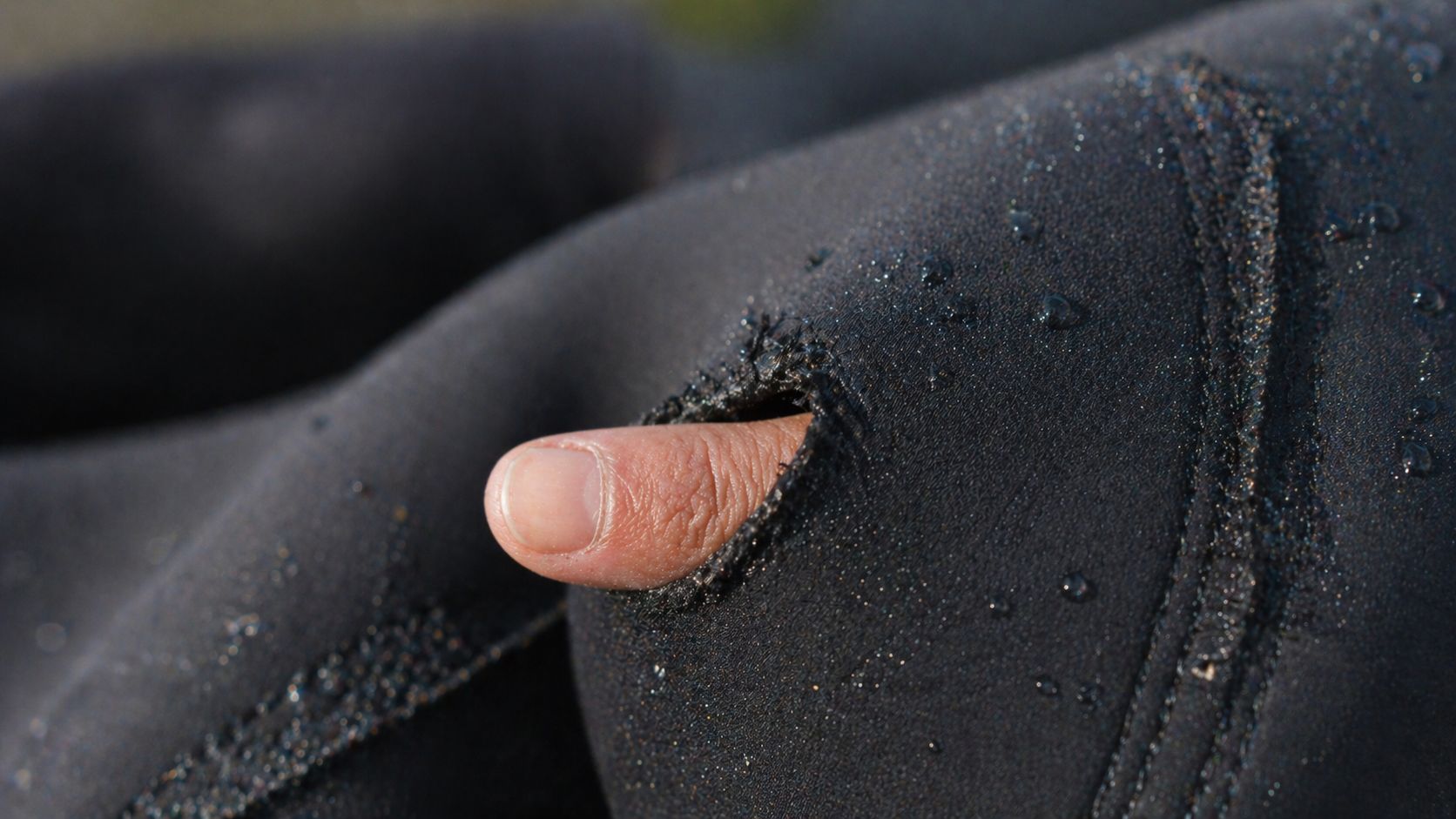
There are two types of surfers in this world. The ones who replace their wetsuit the moment a sleeve starts fraying. And the rest of us. The granola surfers who want to keep our impact on Mommy Earth to a bare minimum.
Wetsuits can suffer a multitude of mishaps. They get worn down, stretched, yanked a bit too much, baked in the sun, and generally pushed to their limits.
Time in the surf is the biggest killer, but we tend to forget how surprisingly easily neoprene can get cut—by reef, rocks, seashells, fins, and, of course, our own fingernails. One awkward landing on a shallow section and suddenly you’ve got a mystery tear you don’t remember earning. Unless, of course, it’s from a chain-linked fence.
Our movements also put seams to the test, especially in high-movement areas like the underarms from paddling and…yes, the crotch. No idea what movement that entails.
🧪 How to fix your wetsuit the official way
If you go the “official” route (and by official, I mean something like a Quiksilver repair guide), the process is very methodical.
Clean the suit. Dry it fully—inside and out. Only then assess the damage and figure out how to approach the fix. Don’t even think about glue until everything is prepped. According to Quiksilver, if a tear is larger than five inches, you should probably talk to a repair pro.
Your repair kit will require neoprene glue, rubber gloves, a paintbrush for application, and a heavy round weight. Yes, a weight. Apparently, you use it to hold the tear open while applying glue. Mind blown.
Then it’s all about layers. Glue it, wait. Glue again, wait again. Only then press the edges together carefully. Leave it alone for at least an hour. Do not tempt fate. Once it’s properly bonded, apply a thin finishing layer of glue on top.
It’s a process.
Some committed surfers even add stitching on top for extra strength. If you go that route, don’t punch all the way through, just catch the surface layer.
🪡 How to fix wee holes
When you get a hole in a sweater, you grab a needle and thread and off you go. Sewing neoprene is not particularly fun—still easier than fixing a leather couch, though—but it can be done.
You’ll need a curved needle and nylon thread, and you basically lace it up like a shoe.
The same method works for larger tears too, but clean up the edges with scissors first. A clean edge = a stronger repair.
🧃 Left field surfer solutions
There are proper wetsuit repair tapes, neoprene cement, and patches.
But there’s also crazy glue and dental floss.
Yes! Waxed dental floss is strong, water-resistant, and weirdly perfect for small repairs. It’s the kind of hack that feels slightly unhinged until you realize it works. Threading a needle can be a bit of a challenge, though.
We should probably add that surfing in a ripped, hole-filled wetsuit can absolutely be done. It’s just not recommended.
🪦 When to call it a day
You’ll know when it’s time.
After spending far too long staring at your wetsuit thinking, “this is still structurally sound,” it starts to feel colder, crustier, and takes on more water. The branding fades.
Until then, if you can fix it, you probably should. As we’ve discovered this week, recycling wetsuits is not easy, and they’re not exactly eco-friendly.
Left field suggestion: wetsuits are expensive, so if you come across a good sale, grab one just in case.
You will need it eventually.
👉 And here’s how to care for your wetsuit when it’s still intact.
SURF SKILLS
🏄🏻♀️ Down the line, off we go

There’s a very specific moment in surfing where things start to feel not the way you want them to be going.
You’re catching waves, the proper kind: green ones, totally unbroken. You paddle, you pop up fast, you ride straight to the beach. Because somehow—despite angling your takeoff, despite your best intentions—you just keep going straight.
You know you’re close. So close to being a proper surfer, you can almost taste it. And that’s the worst part.
Because everyone says the same thing: “Just go down the line.”
Oh. Cool. Thanks. Let me just have a wee coffee and off I go down the line.
🛜 The internet weighs in
When someone asked this exact question on Reddit, the responses came in fast. And reading through them feels a bit like being handed pieces of a puzzle, and you’re expected to put it together picture side down.
One person says it’s your pop-up. It has to be fast and clean so you can set up your bottom turn. Another says wave selection is the real issue. Someone else throws in that if you don’t engage your rail, you’ll just skip down the face no matter what you do.
Then someone casually drops: “Look where you want to go.” At this point, your blood starts boiling, and you sign up for a Surf Simply or Ombe subscription.
👀 The “look where you want to go” thing, again
This comes up again. And again. And again. We’ve written about it time and time again. We forget it the moment we wade into the water.
So, one more time. Look down the line. Always. And never at the nose, not at the beach, not at where your feet land after the pop-up. Down the line.
Because your body follows your head. Not metaphorically—literally. Because it’s the heaviest part of your body.
🏄♀️ But also…your body is doing weird things
At some point, someone explains something that feels more technical but actually unlocks a lot. This sounds promising—they call it “engaging the rail.”
You’re not meant to stand directly on top of your board. You’re meant to be slightly off it. Your center of mass shifts over the rail, not perfectly centered. Which feels wrong at first, because every instinct says “stay balanced.”
But balanced is exactly what sends you straight down into whitewash.
And that’s why, to go down the line, you have to lean into the wave. Engage that rail. It will feel more like being on your heels if you’re going backside, or on your toes if you’re going frontside.
Someone described it like riding down a snowy hill. If you keep your board flat, you slide straight down. If you angle the edge, you hold your line.
⚡ The other, not so helpful stuff
Even if we all hate hearing it, we will say it again. A slow or messy pop-up means you’re already late. Annoyingly, the pop-up does matter if you want to go down the line. You can get away with it if you want to go straight.
And then there’s the wave itself. You’ve got to know how to read it, where to sit on it, and what ride to expect. East Coast waves are not like West Coast waves. You will need to manage your expectations.
🧠 The real answer no one wants
Back to the puzzle. You need to piece it together. Angle your takeoff. Pop up quickly. Look where you want to go. Engage your rail. Shift your weight. Stay low. Relax your body. Let your shoulders follow your head.
If it sounds like a lot, it’s because it is. It all has to come together in a split second. We skip a step and it all starts falling apart. Argh.
There’s nothing to it. Successfully going down the line will only come from doing it badly, repeatedly, until our bodies figure it out faster than our brains can. Good luck to us all!
👉 And if you need help with bigger waves or pop-ups…
THE WIPEOUT WEEKLY SURF NEWS ROUNDUP
🗞️ Skiers almost ran surfing. Comeback after paralysis. Surfing as therapy. Drunk lifeguards. Statue drama.

🌊 Surfing almost got handed to the ski people
After a bizarre detour where U.S. Ski & Snowboard tried to take over Olympic surfing, USA Surfing is officially back in charge ahead of LA 2028.
🏄♂️ A surfer finds his way back after paralysis
San Diego surfer Collin Bosse is back in the water after a life-changing spinal injury, redefining what continuing in surfing looks like.
🧠 Surfing as therapy…again (but this time with a stroke)
UK wave pool founder Nick Hounsfield credits surfing with helping his recovery after a stroke, adding to the growing pile of “there’s something in this” stories.
🍺 Lifeguards, alcohol, and very questionable decisions
Three Honolulu lifeguards have been suspended after testing positive for alcohol on duty during severe conditions—yes, really.
🏖️ Newquay gets a surf statue (and people have thoughts)
A new surfer statue overlooking Towan Beach is already doing its job—drawing crowds, photos, and the full spectrum of opinions.
PIC OF THE WEEK
🌅 Surfing in the South Bay of LA
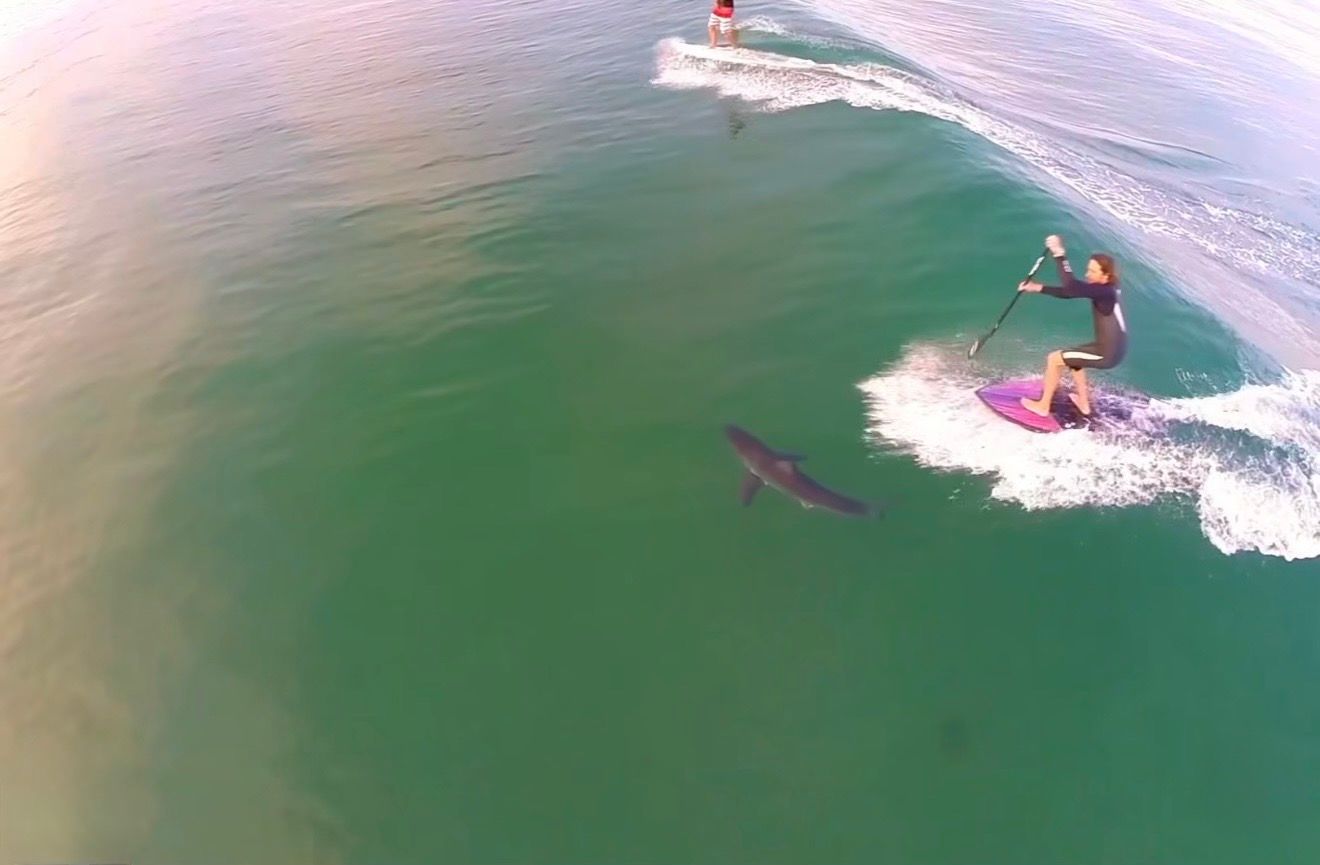
This week’s pic of the week is by Bo Bridges (@bobridges on Instagram), a self-described visual artist and entrepreneur.
Well, actually, it’s a shot from a video Bo took about a week ago in the South Bay.
Bo is also responsible for the iconic photo of Tom Cruise hanging off the side of a plane (while it took off and landed) in Mission: Impossible – Rogue Nation. Kudos.
HOUSEKEEPING
🦦 Who the hell is Wee Fatty?

Good things come in threes. Meet Wee Fatty, our resident sea otter with a penchant for surfboards and holding hands.
Well, that’s Wee Fatty.
Don’t call her a surfboard thief—
No one should surf alone.
Found an old red paisley kerchief once,
Bandana Crew—all her idea.
The best surf buddy you could wish for.
Ridic cute. Floatsalot. Will hold hands.
ALL THINGS THE WIPEOUT WEEKLY
The Wipeout Weekly—our home and digital magazine.
The Wee Surf Shoppe—explore useful, cute, and sometimes simply outrageous surf “stuffs”.
The Wipeout Weekly podcast—daily surf stories and weekly* guests.
All Things Surf Directory—surf retreats, learn to surf, classifieds, surf-side lodging, you name it.
Girls Who Can’t Surf Good—an 86k-member-strong private group on Facebook.
Feedback—we do want to hear from you! Whatever is on your mind, drop us a line.
⬆️ Aaaaaaand that was the last wave of the week!
If a friend forwarded this and you liked it, hit subscribe & join us! We will see you all next week! 🌊
🏄 How was this week's edition of The Wipeout Weekly?Drop in with your pick 👇 |
Reply