- The Wipeout Weekly
- Posts
- 🏄♀️ Why we should bodysurf (but we don't) 🌊
🏄♀️ Why we should bodysurf (but we don't) 🌊
Plus: Spanish waves, swell vs surf, belated birthday, and as always—surf news

👋 Happy belated birthday to us! Over the weekend we celebrated our first birthday. We hope you’ve enjoyed getting older with us. 😜
Normally people receive presents on their birthday—but that’s not how we do things here. We want to give you a gift.
Just reply to this email with your wishlist for next year’s newsletter:
shorter or longer
more of this / less of that
new ideas we should try
And we’ll send you some The Wipeout Weekly swag.
🏄♀️ Let’s surf:
Why we should bodysurf (but we don’t) 🌊
Swell height vs surf height explained 🔬
Spain’s gem of a wave: Mundaka 🇪🇸
Surfing once a year—and still worth it 💙
Surf news roundup 🗞️
SURFODRAMA
😱 Why we all should bodysurf (but we don’t) 🌊
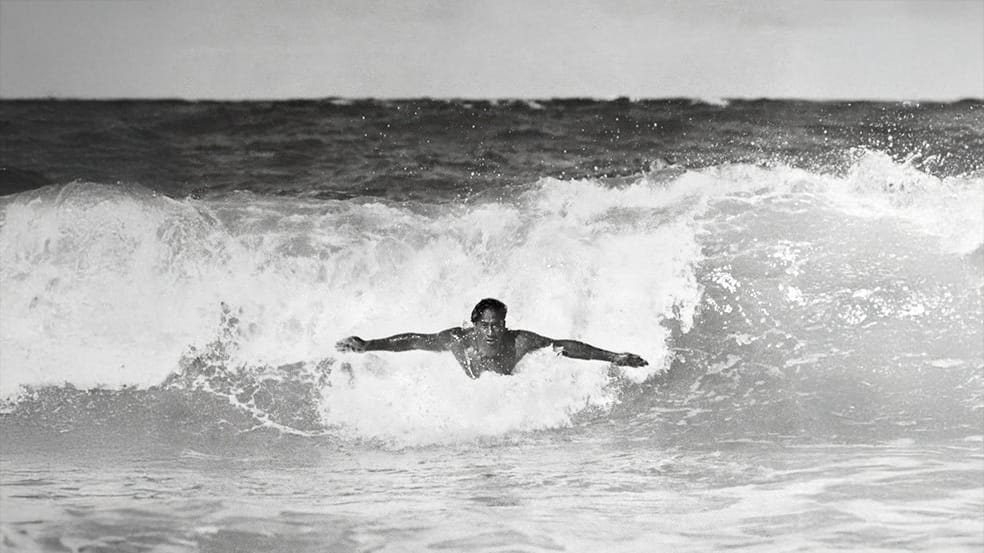
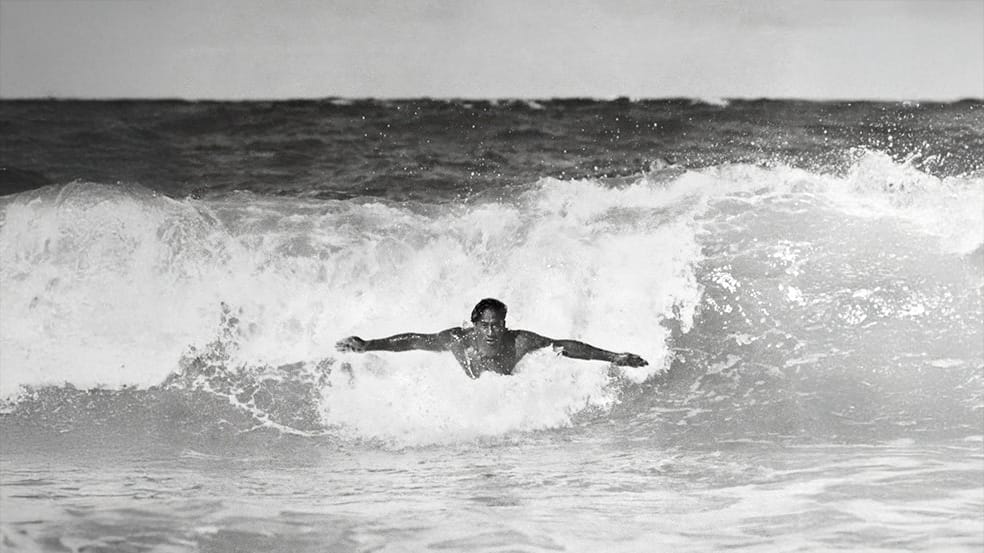
Duke. Flying.
Before surfboards, there was bodysurfing: riding a wave using only your body as a planing surface.
The purest form of wave riding that most surfers—with a few exceptions—gave up.. Shouldn’t we reconsider?
Many traditional Hawaiian watermen consider bodysurfing closer to original wave riding than modern surfing. Even Duke Kahanamoku was a legendary bodysurfer and reportedly preferred it to board surfing.
No board. No equipment. Just the body and the wave. Anyone can try it. Almost as democratic as running—if you happen to live by the coast.
Bodysurfing champion Mike Stewart described it as being “just so complementary to what the wave is doing… the best interaction between man and nature that exists.”
🐬 Where bodysurfing came from
According to the Encyclopedia of Surfing, nothing factual is known about the exact origins of bodysurfing. It’s possible that humans were inspired to emulate wave-riding sea animals such as dolphins and seals.
If board surfing may date back as far as 2000 B.C., there’s no telling when humans first started bodysurfing. It may well be the oldest form of wave riding humans ever practiced.
🏄♂️ Why surfers used to bodysurf
You could argue that bodysurfing is the purest form of surfing that almost none of us practice anymore.
Before the surf leash was invented in the early 1970s, all surfers were adept bodysurfers—not by choice, but by necessity. Nearly every wipeout meant losing your board and bodysurfing your way back to shore to retrieve it.
🌊 How bodysurfing helps your surfing
We often say surfing is one of the hardest sports to learn. But bodysurfing may actually be harder than it looks.
People assume it’s easy because there’s no board involved. In reality, bodysurfing requires excellent wave timing and positioning, which means a strong understanding of how waves behave.
It also demands strong swimming ability and good breath control—skills that come in very handy during wipeouts.
All skills that are invaluable in surfing.
🤿 How to bodysurf
Think of your body as a human surfboard rail.
One arm is extended forward like a keel, while the other trails behind. Arch your back slightly and kick for speed. And don’t go straight toward the beach—you need to angle across the wave face.
Experienced bodysurfers can ride waves 30–100 meters this way.
Modern bodysurfers often use handplanes, small boards strapped to the hand that help create lift, increase speed, and steer the wave.
Some surfers argue that this blurs the line between bodysurfing and surfing, because another planing device is being used.
📍 Where to bodysurf
Some waves are actually more famous for bodysurfing than surfing.
The Wedge, California — Huge shorebreak wedges that create powerful bodysurf rides.
Makapuʻu Beach, Hawaiʻi — One of the most famous bodysurf beaches in Hawaiʻi.
Sandy Beach, Hawaiʻi — Known as “Broke Neck Beach” because of its powerful shorebreak.
If you’re thinking bodysurfing is easier than surfing, the beginner experience usually looks more like swallowing half the ocean and getting slammed into sand.
Still, fun. And so worth it.
SURF SCIENCE
🔬 Swell height vs surf height fully explained
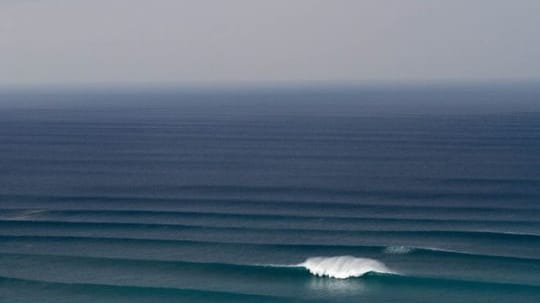
As we’ve been staring at a ridiculous number of surf forecasting apps lately for our “It’s a small small wonderful world of surf apps” exploration (see next week’s newsletter), it occurred to us that swell height vs surf height might be one of the most confusing things in surfing.
Forecasts mix these up all the time in how they display numbers, which is why we sometimes show up at the beach expecting overhead waves and instead get flat-as-a-pancake disappointment.
Let’s clear something up right away: swell height and surf height are not the same thing. They aren’t even measured in the same place.
🌊 Swell height (waves out at sea)
Swell height describes the size of waves in the open ocean, before they reach land.
Imagine you’re sitting on a boat far offshore. The waves moving underneath you—that’s the swell. These waves may have traveled thousands of miles across the ocean after being generated by storms somewhere else.
Swell forecasts measure these waves before they interact with the coastline.
🏄 Surf height (the waves we actually ride)
Surf height is the size of waves once they reach the shore and begin breaking.
This is the number surfers actually care about.
When swell moves into shallow water near the coastline, the ocean floor slows the wave down. As the bottom of the wave drags along the seabed, the energy compresses and the wave rises—until it eventually breaks.
That breaking wave is the one you paddle into.
Same ocean. Completely different numbers.
🧠 Why swell height vs surf height numbers don’t match
Science. Lots of it.
The swell you see on a forecast does not automatically translate into the same size wave at your beach. Once swell approaches land, a lot of things start affecting it.
Swell direction matters because some beaches face certain directions better than others. Ocean floor shape—also known as bathymetry—plays a huge role too, with reefs, sandbars, and points reshaping waves. Then there’s swell period, because longer-period swells carry more energy.
Wind conditions change things as well: onshore wind can completely destroy waves. And finally, local geography like headlands or islands can block swell entirely.
What all of this means is that two swells with the same height offshore can produce completely different waves once they reach the beach.
📱Why forecast apps show different numbers
Some forecast sites show swell height offshore. Others estimate surf height at your specific beach.
Both approaches are useful—but they are telling you different things.
Estimating surf height from swell data is complicated because it requires understanding how waves transform as they move into shallow water. Forecasting models have to factor in swell direction, energy, bathymetry, and a lot of physics.
Which is why two surf forecast sites can show completely different numbers for the exact same day.
🤷♂️ The real secret of surf forecasts
If you only look at swell height, you might think a spot will be firing when it’s actually tiny.
Or you might skip a session that turns out to be great.
Understanding the difference between swell height and surf height helps. But what’s even more useful is knowing which one your forecasting app is actually showing.
And eventually you may discover the real secret of surfing.
The forecast is wrong about half the time anyway.
SURF SPOT SPOTLIGHT
🇪🇸 Spain’s gem of a wave: Mundaka
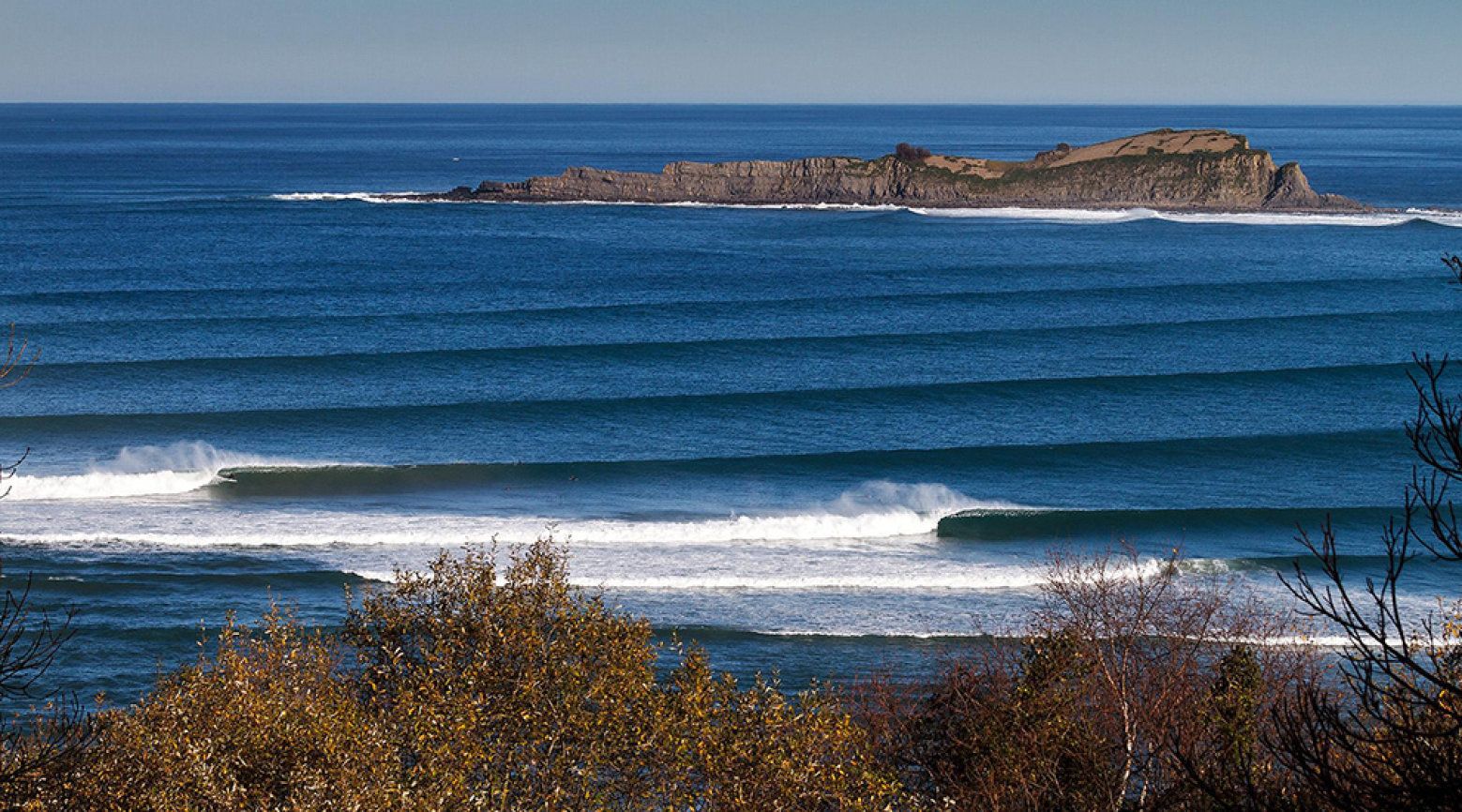
Surfer magazine once described Mundaka as “the best restaurant in town—but you never know when it’s going to be open.” Tom Curren called it “the best wave in the world.” And Surfline admires its almost mathematical perfection when it comes to producing incredible waves.
But most of us don’t have to worry about dining at Mundaka. Even though it’s one of the best waves on the planet—and it breaks over sand—it’s best left to advanced intermediates and pros.
Mundaka is a fast and legendary wave located near, of course, Mundaka in the Basque Country of Spain. Europe’s best left-hand river-mouth wave sits at the mouth of the Oka River, opening into the Bay of Biscay. When conditions align, it produces long, hollow barrels that have made it a pilgrimage spot for surfers from around the world.
🧮 Why it’s so perfect
Mundaka is a sandbar river-mouth wave. That means the wave forms because sand carried by the river creates a perfectly shaped underwater bank. Swell wrapping into the estuary hits this sandbar and peels left across it.
When it works, the wave can run up to 200 yards, producing long, fast barrels with multiple sections and deep tube rides. No wonder every surfer worth their salt lose their minds about it. It’s widely considered one of the best barrel waves in Europe.
The best conditions usually arrive between September and December—which is not a very long season for this particular restaurant to be open.
During this period the sandbar is fully formed, water and air temperatures are relatively pleasant, and the winds cooperate. When North Atlantic swells arrive, they bring the goods.
According to the Encyclopedia of Surfing, 6–10 foot surf is optimal. Smaller waves tend to be shorter, while larger swells can “crumble and break before hitting the sandbar.”
⚠️ Why it’s so hard
I’m going to borrow this description from Surfline. I’ve never been to Mundaka myself—I assume someone from their team has.
“The water detonates onto the shallow sand bank in a steep and pitching lunge, and although it is sand-bottomed, from here on it breaks like a reef.”
Those who hit the bottom do so hard.
The outer peak is usually dominated by a tight pack of surfers, but even the scraps further down the line can still offer great barrels.
Expect to compete with up to 100 surfers in the lineup.
Here’s another fun fact: because of dredging upstream, the break stopped working for nearly three years before the sandbar rebuilt itself and the wave came back online in 2006.
📜 How Mundaka was discovered
According to The Encyclopedia of Surfing, no one knows exactly when Mundaka was first surfed, but it was likely sometime in the 1960s.
Once Surfer Magazine published a photograph and article about the wave in 1973, the secret was out. Mundaka quickly became a bucket-list destination—the kind of place surfers travel to for bragging rights.
Maybe… one day… to look at.
GIRL WHO STARTED SURFING AT 62
🏄🏻♀️ Surfing once a year—and still worth it 💙
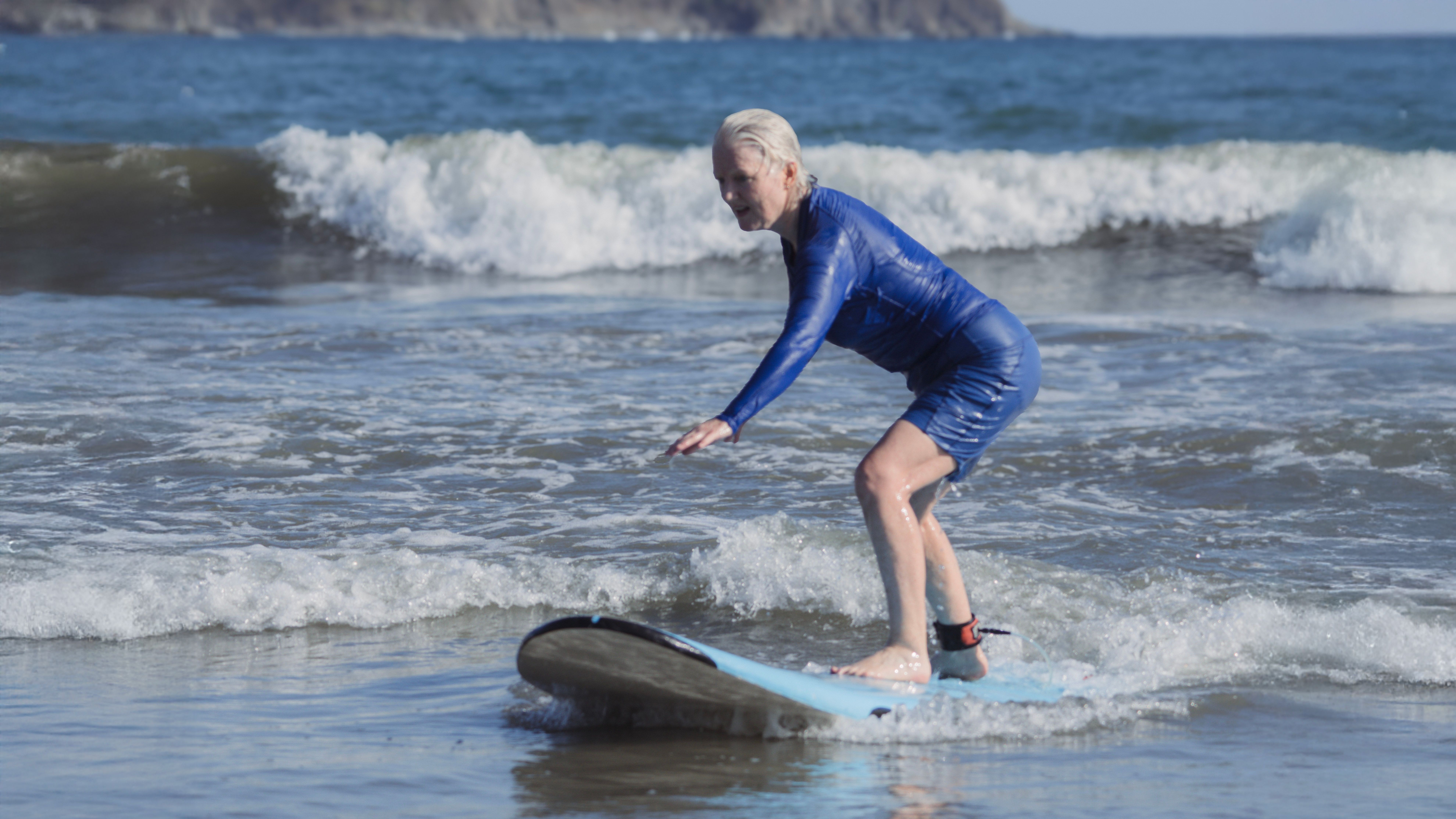
Kim from Toronto first tried surfing a few years ago on Lake Ontario—with not much success.
Some people might have given up: already an adult learner, not-so-great local conditions. But not Kim.
Now at 66, she’s still progressing, still loving it, and hoping to surf again in her own neck of the woods.
THE WIPEOUT WEEKLY SURF NEWS ROUNDUP
🗞️ Shark attacks. Sardine science. Surfing dogs. Fresh shark stats.

🦈 “It’s a miracle”: surfer survives suspected great white attack
A surfer in Western Australia escaped with his life after a suspected 10-foot great white shark struck his foil board, before he rode nearly 9 kilometers back to shore without falling.
🐟 Can eating 1,000 sardines make you a better surfer?
A Harvard-trained researcher ate about 1,000 sardines in 30 days to test the effects of extreme Omega-3 intake, reporting increased cold tolerance but also a persistent sardine smell.
🐕 Dogs will surf again in Florida this April
The 14th Annual East Coast Dog Surfing Festival returns to Cocoa Beach on April 5, where dogs will compete in surfing heats, costume contests and the crowd-favorite Doggy Bikini Contest.
📊 Global shark deaths jump 125% in 2025
A new international report recorded 65 unprovoked shark bites worldwide last year, including nine fatalities, with the United States reporting the highest number of incidents and Australia seeing a notable increase.
ALL THINGS THE WIPEOUT WEEKLY
The Wipeout Weekly—our home and digital magazine.
The Wee Surf Shoppe—explore useful, cute, and sometimes simply outrageous surf “stuffs”.
The Wipeout Weekly podcast—daily surf stories and weekly* guests.
All Things Surf Directory—surf retreats, learn to surf, classifieds, surf-side lodging, you name it.
Girls Who Can’t Surf Good—an 86k-member-strong private group on Facebook.
Feedback—we do want to hear from you! Whatever is on your mind, drop us a line.
⬆️ Aaaaaaand that was the last wave of the week!
If a friend forwarded this and you liked it, hit subscribe & join us! We will see you all next week! 🌊
🏄 How was this week's edition of The Wipeout Weekly?Drop in with your pick 👇 |
Reply