- The Wipeout Weekly
- Posts
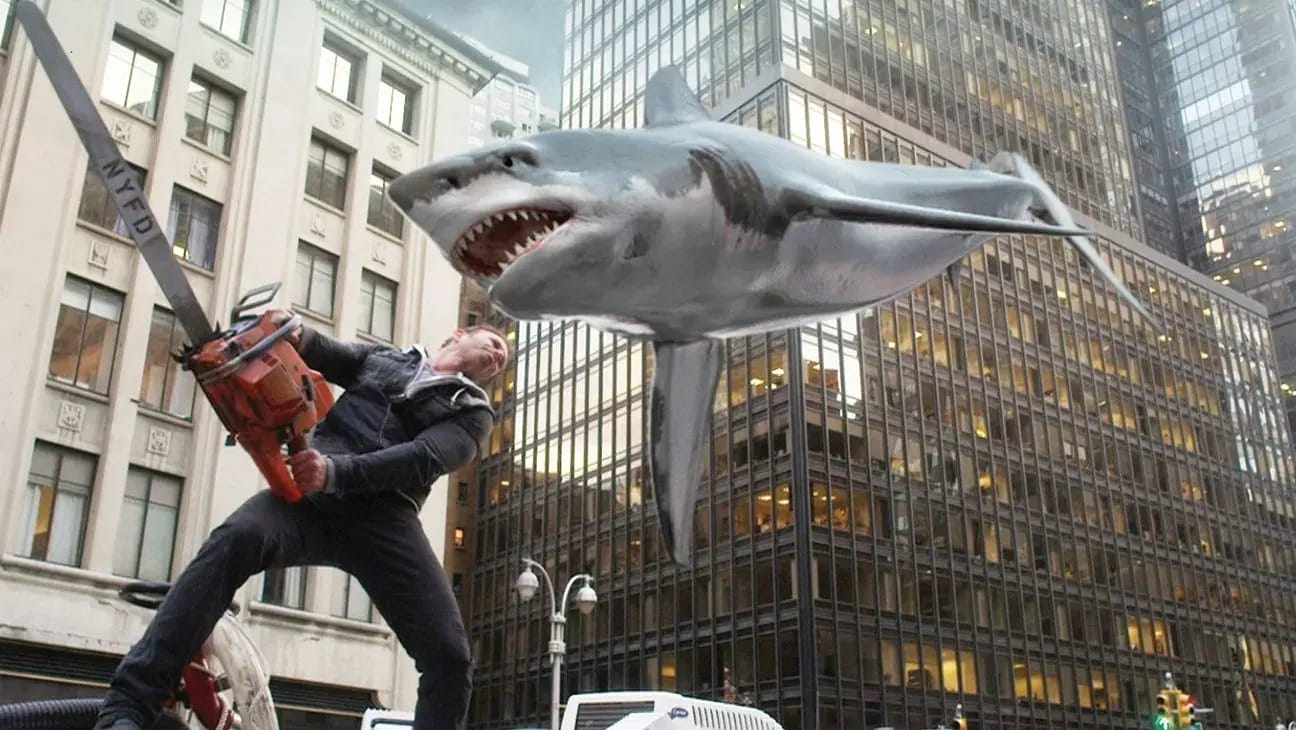
- 🏄♀️ Will you get bitten by a shark this year? 🦈
🏄♀️ Will you get bitten by a shark this year? 🦈
Plus: Aloha. Raglan. Australian lineups. All Things Surf Directory. Surf kinda news. And more...

––––
👋 Happy National Chocolate Fondue Day! 🍓 We’re gearing up for the launch of the All Things Surf Directory, and the chocolate connection will make sense in a minute, we promise!
🏄♀️ Let’s surf:
Will you get bitten by a shark this year? 🦈
What Aloha actually means 🌺
Why Raglan matters (and what is it?) 🤔
All Things Surf Directory is coming! 🙌
Conquering Australian lineups 🏄🏻♀️
Celebrity news roundup 🤢🗞️
Passion, not obsession pod 🎙️
SURFODRAMA
😱 Will you get bitten by a shark this year? 🦈
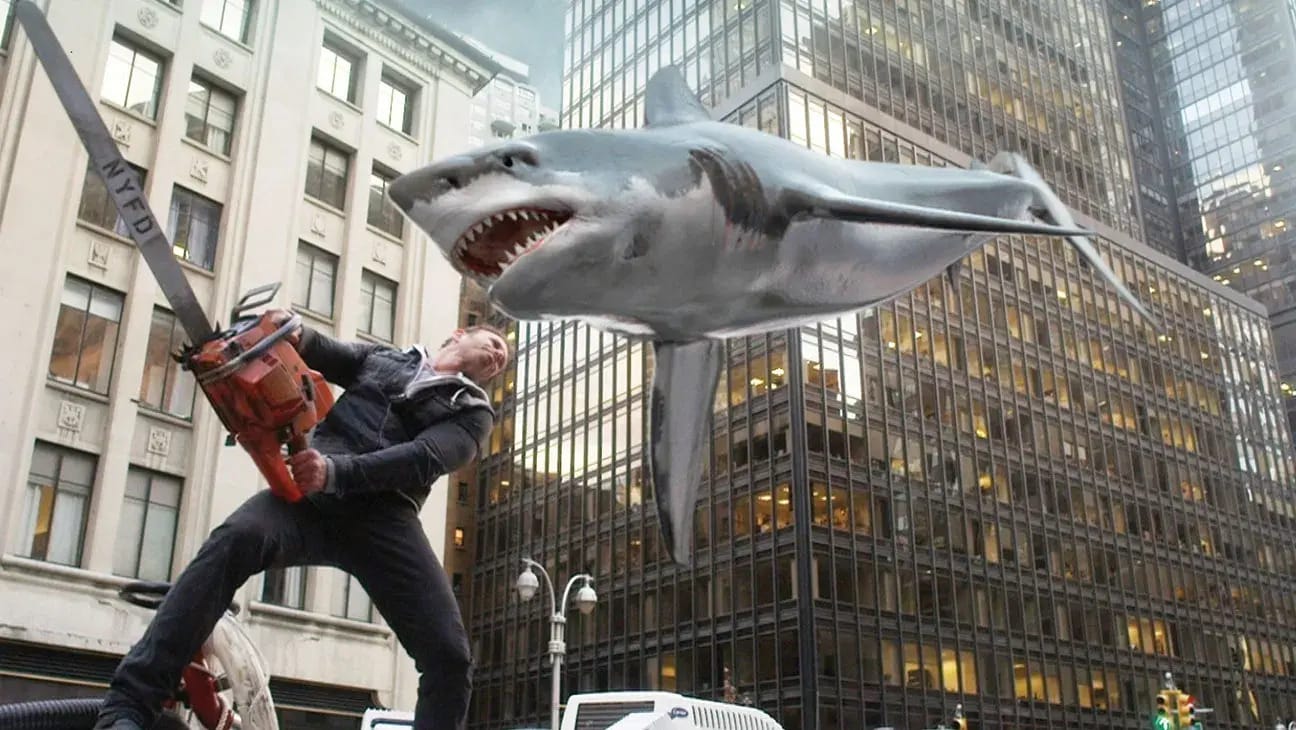
This is really just a little pep talk—to myself, and to anyone who’s listening—to remind ourselves that we won’t get bitten or eaten by a shark in 2026. Most likely. Almost definitely.
Because despite having done my research, and having written extensively about sharks and surfers, the latest incident near Monterey involving a triathlete’s death from a shark bite, as well as four recent shark attacks—one of them fatal—in Sydney, left me a little shook.
Especially as it’s been reported that the swimmer in California was wearing a shark band. For those of you who are unfamiliar with the concept, it’s an electromagnetic device that you wear on your ankle that is supposed to interfere with a shark’s built-in sensory system.
This, combined with the fact that even though we only started our surf news roundup four months ago, we’ve already covered shark stories 12 times, could make anyone feel slightly paranoid.
🦈 How rare shark attacks actually are
Shark attacks are rare. Like, really rare. And in the US they are even rarer—or is it more rare? You’ve heard the stats: you are more likely to be in a car accident driving to the beach or get struck by lightning. According to science, the chances of being bitten are incredibly small: 1 in 4.3 million.
But despite attacks being so rare, are they perhaps a teeny tiny bit less rare now?
We went back to do some serious shark research and returned with good news: the answer is no. No, shark attacks are no more frequent than they have ever been. If anything, the number of bites has been steadily dropping over the last decade, according to marine scientists. The reason? We are more aware of sharks than ever.
🦈 So why does it feel like Sharknado?
Three reasons.
One—everyone has a phone, and shark bites (or the results of shark bites) are now reported with visual evidence pretty much in real time. Our fascination with sharks knows no bounds, so these incidents are reported far and wide. The same shark story may even be covered multiple times.
Two—and of course, there’s social media, where this stuff goes viral. So all you’re seeing is: shark, shark, shark. No wonder we’re freaking out. Just this week, a drone video of surfers in La Jolla, California, swarmed by sharks was being shared on Instagram and Threads. Thankfully, most surfers were quick to point out that these were leopard sharks, lovingly called “puppies of the ocean,” and that this situation occurs very frequently. But now imagine if a wannabe surfer saw this footage without any additional commentary. Sometimes it’s just better not to know what’s below the surface.
Reason number three—and this is perhaps more specific to the US. More people than ever now live on the coast—30 percent of the population, to be precise. This means more folks going to the beach and taking up ocean sports. You do the math.
If you want to know more about how to avoid encounters with sharks, we do have a guide on that. And while we cannot guarantee anything, we believe that the chances of any of us being attacked by a shark in 2026 are still extremely low. 🦈
WORD OF THE WEEK
🌺 What Aloha actually means
Aloha is a very familiar word to surfers across the globe. It means “hello” and “goodbye,” right? If that were the case, this story would be a paragraph long. But as it happens, some anthropologists and linguists believe that Aloha doesn’t have a direct equivalent in English at all.
☺️ What Aloha means
In Hawaiian, alo means presence, face, front, sharing, being with—and hā means breath, life force, life. Early Hawaiian dictionaries described Aloha as a word expressing a wide range of feelings: love, affection, gratitude, kindness, pity, compassion—but also grief.
Etymologically, Aloha belongs to the broader family of Polynesian languages and is often connected to qarofa (Proto-Polynesian: love, pity, compassion) and the Proto-Oceanic root qarop(-i), meaning “to feel pity, empathy, or sorrow.”
🥰 What Aloha also means
There are other interpretations, too. One breaks the word into alo (sharing), oha (joyous affection), and hā (life energy; breath), resulting in “the joyful sharing of life energy in the present.”
Another equates Aloha with “sparkling with positive thoughts in order to procure a positive reality for all.”
And Queen Liliʻuokalani is often quoted as saying: “Aloha is to learn what is not said, to see what cannot be seen, and to know the unknowable.”
SURF SPOT SPOTLIGHT
🤔 Why Raglan matters: History, resistance, and a very very long left
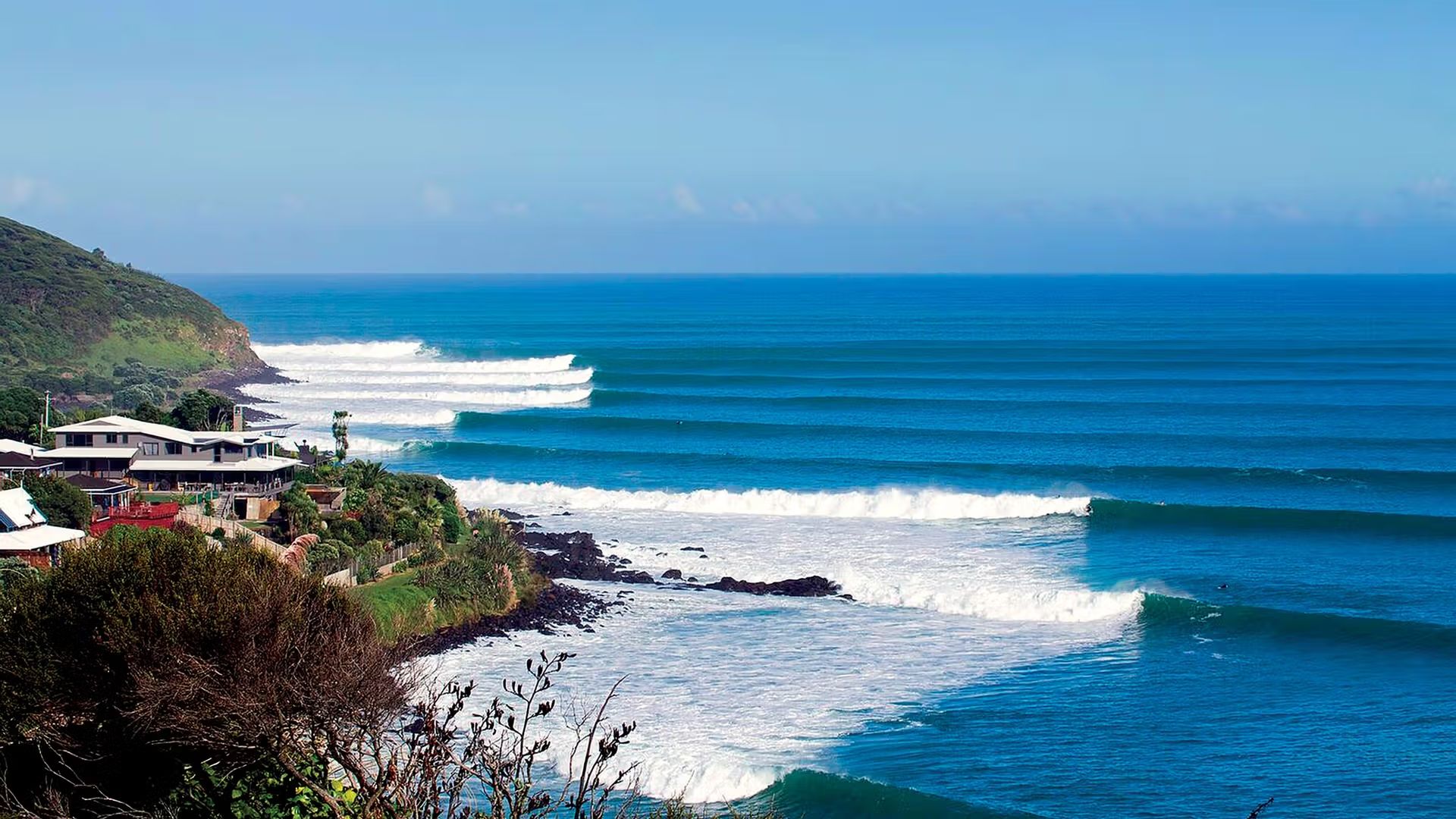
J-Bay is out, Raglan is on the Championship Tour (it’s that thing the pro surfers do). So what’s so special about this Kiwi wave?
🇳🇿 Where Raglan is—and where it comes from
Raglan sits on the west coast of New Zealand’s North Island, about two hours from Auckland and 45 minutes west of Hamilton.
Before it became a surf pilgrimage, Raglan—Whāingaroa—was (and is) Māori land, long inhabited by Waikato-Tainui iwi. The name is often translated as “the long bay” or “the long pursuit.”
After the New Zealand Wars in the 19th century, large areas of land around Raglan were confiscated by the Crown (you know, the British). During WWII, more land was taken to build an airfield—with a promise it would be returned. It wasn’t.
That broken promise led to one of Aotearoa’s (Aotearoa is the Māori name for New Zealand) most significant land-rights movements. In the 1970s, Māori activist Eva Rickard led protests and occupations demanding the land back. Arrests followed. So did change. In 1983, the land was finally returned—making Raglan a powerful symbol of Indigenous resistance and reclamation.
🌊 The wave itself
Surfwise, Raglan is New Zealand’s most famous wave—and yes, it’s a left. According to the Encyclopedia of Surfing, it’s “capable of producing rides of nearly surreal length.”
Back in 1989, Surfing magazine named Raglan one of the “25 Best Waves in the World.”
Raglan is made up of five separate surf spots: a beachbreak, a reefbreak, and three point breaks. Manu Bay is the prettiest—and the star—capable of carrying you hundreds of meters on the right swell and tide. Whale Bay is more exposed, faster, and heavier, while Indicators offers a softer entry point.
And when those three points link together? You get a continuous wave that can run for more than two miles.
Quoting the Encyclopedia of Surfing again:
“On such occasions, local surfers take turns waiting at the base of the point to drive groups of their friends back to the starting area.”
Raglan is generally best during summer and fall, when four- to six-foot surf is fairly common and water temperatures sit in the mid-60s.
🌞 From endless summer to the Championship Tour
Like many waves before it, Raglan was introduced to the world in 1964—because of course Bruce Brown and The Endless Summer. Pre–Endless Summer, you could surf Raglan by your lonesome. Post–Endless Summer, “surfers would be scrambling down the hill like termites exiting a smoking tree”—a quote from a New Zealand journalist that still holds up.
Raglan has been a fixture on the New Zealand Championship Circuit for years. Now, it’s officially stepping onto the world stage, with its debut as a Championship Tour stop in May—marking a big moment not just for the wave, but for New Zealand surfing as a whole.
ALL THINGS SURF DIRECTORY
🏄🏻♀️📍 Our All Things Surf Directory is community-built
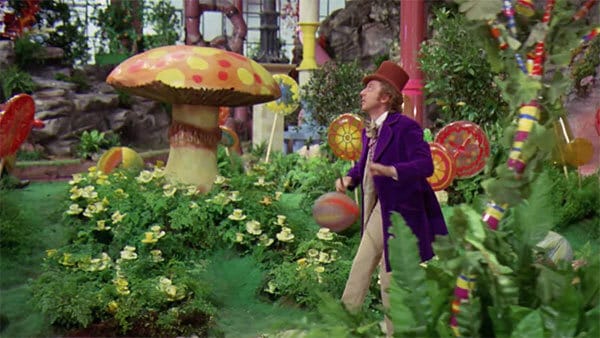
Community-built. Not Oompa Loompa-built.
The All Things Surf Directory is basically Willy Wonka’s Chocolate Factory, but for surf stuff.
We’re just starting out, but today you can explore a small selection of upcoming surf retreats, including the ones in Sri Lanka, Nicaragua and South Africa, in our All Things Surf Directory.
Our mission is to make it easier for you to find surf instructors at your local break, a new apartment by the beach, a job or a volunteering opportunity that will let you surf every day. Or a surf-friendly conditioner. Or a workshop on cross-stepping. Or a second-hand board near you. Or your next surf forecasting app. Or a surf meetup. Surf’s the limit!
So please spread the word to anyone and everyone who should have their listing (it’s totally free!) in our All Things Surf Directory.
You can check out the instructions on how to add a listing or head to the directory.
Just keep in mind that we only have a handful of listings right now. 🥰 Your feedback and ideas are always welcome!
GIRL WHO TOOK UP SPACE
🏄🏻♀️ Conquering Australian lineups as an adult learner: Silvia’s story
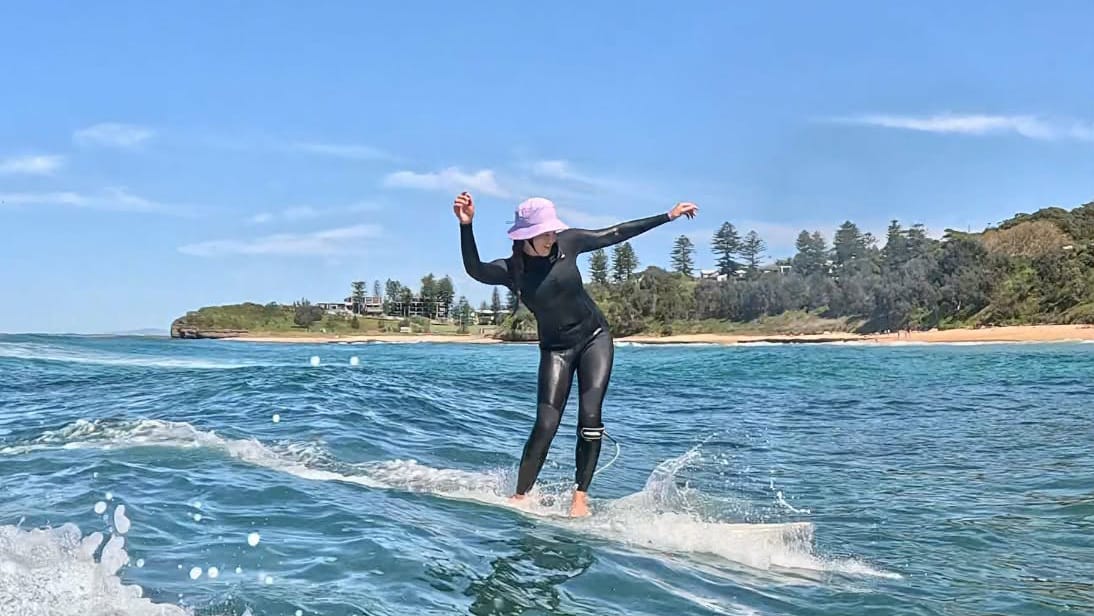
As if surfing is not hard enough, learning as an adult in the highly competitive lineups of Australia makes it almost impossible. Silvia persevered.
For anyone who’s getting out there on their own and feels like they don’t belong—this one is for you.
THE WIPEOUT WEEKLY SURF NEWS ROUNDUP
🗞️ Celebrity news roundup: Prince Harry. Jason Momoa. John John Florence. And U.S. Ski & Snowboard.
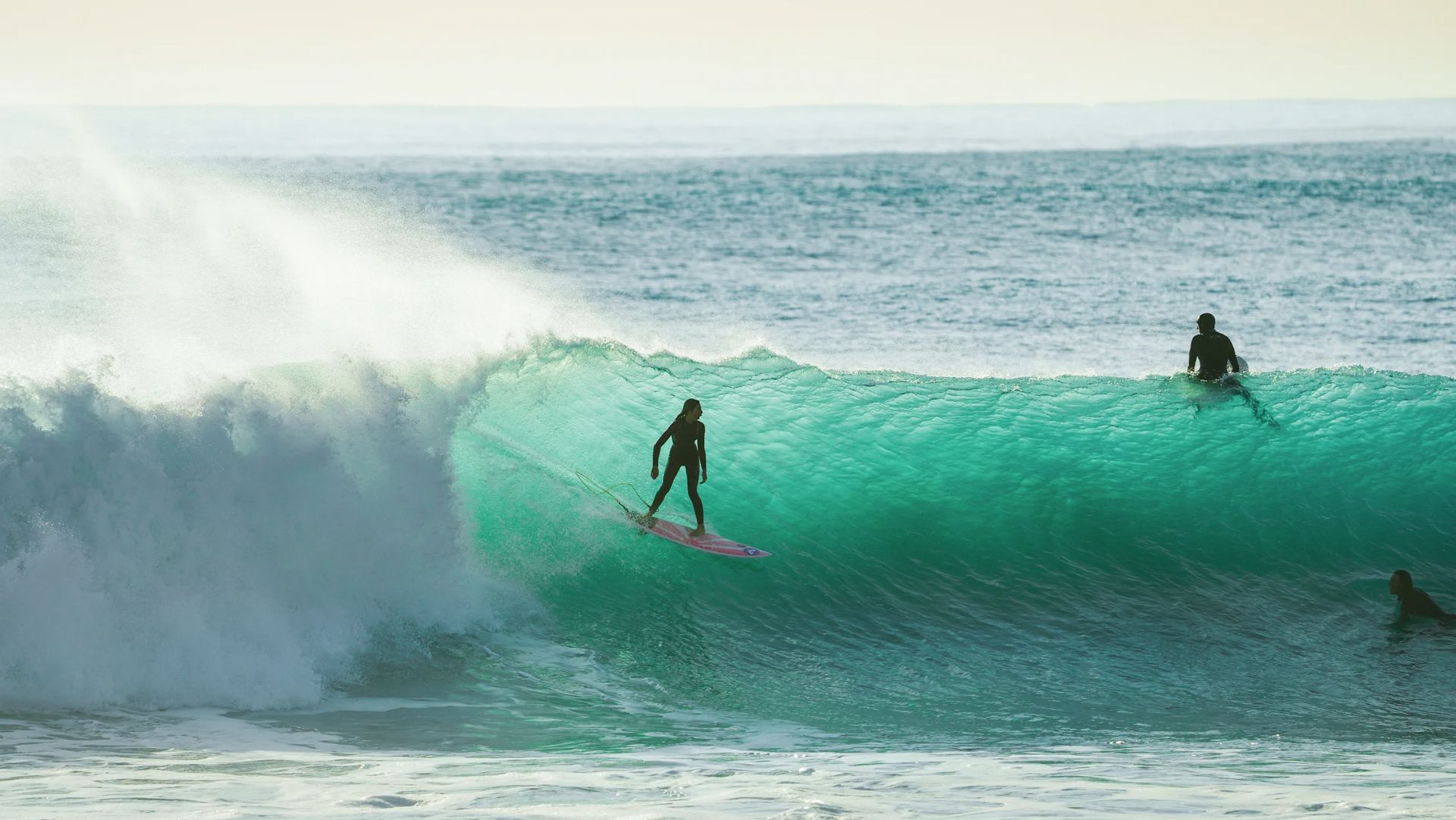
At The Wipeout Weekly, we strive to round up mostly positive surf news for you every week. This week, well, we struggled. Please forgive us. 😜
🤴 Prince Harry–a surfer?
The biggest story this week is not that Prince Harry went out surfing at Kelly’s Surf Ranch to the tune of $50,000 for a day, but that he surfed pretty well.
👑 Jason Momoa—a surfing royalty?
We got all excited thinking Jason Momoa is somehow a forgotten descendant of King Kamehameha. But the headline was slightly misleading. He is related to the surfing legend–Buffalo Keaulana.
👴John John Florence–a pensioner?
John John announced that he would not be returning to the Championship Tour in 2026. He will spend time with his family sailing around the globe instead.
🛹 U.S. Ski & Snowboard–asking for more trouble?
After pursuing surfing for nine months and ultimately failing to get it under its wing, U.S. Ski & Snowboard is now going after skateboarding.
THE WIPEOUT WEEKLY PODCAST
🎙️ Surfing as a passion, not an obsession with Surfer Cass
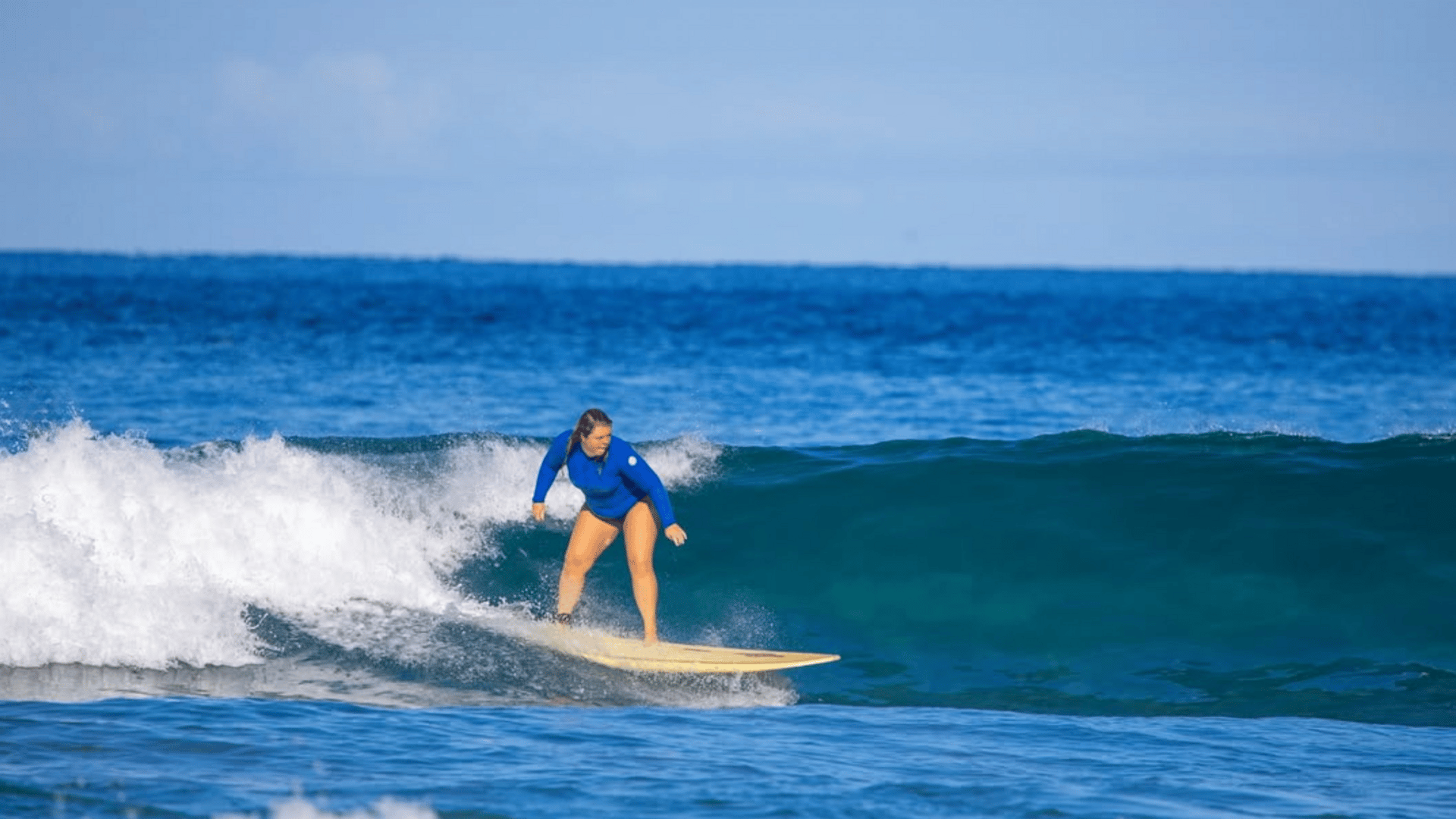
We’re not gonna lie. We have certain preconceptions about surfluencers. To spend this much time surfing, filming surfing, editing surfing, posting about surfing, you have to be obsessed. And that ain’t healthy.
That’s why it was so refreshing to hear from Cass when she came to our studio about why it took her so long to start surfing, how she hopes to help other surfers who are facing similar challenges, and where she goes from here.
🎧 Listen to The Wipeout Weekly on your fav pod platform or right here.
ALL THINGS THE WIPEOUT WEEKLY
The Wipeout Weekly—our home and digital magazine.
The Wee Surf Shoppe—explore useful, cute, and sometimes simply outrageous surf “stuffs”.
The Wipeout Weekly podcast—daily surf stories and weekly* guests.
All Things Surf Directory—launching soon, but check out a selection of surf retreats today.
Girls Who Can’t Surf Good—an 86k-member-strong private group on Facebook.
Feedback—we do want to hear from you! Whatever is on your mind, drop us a line.
⬆️ Aaaaaaand that was the last wave of the week!
If a friend forwarded this and you liked it, hit subscribe & join us! We will see you all next week! 🌊
🏄 How was this week's edition of The Wipeout Weekly?Drop in with your pick 👇 |
Reply